What Is Reclaimed Wood? A Homeowner's Guide to Old-Growth Timber in WNC
Reclaimed wood is one of the most misunderstood materials in custom woodworking. Some people picture rough barn boards. Others imagine expensive, precious material they can't afford. The reality is more interesting — and more accessible — than either of those ideas.
What Reclaimed Wood Actually Is
Reclaimed wood is timber salvaged from old structures — barns, mills, factories, warehouses, and farmhouses — rather than cut from new trees. The key word is "old." We're not talking about wood that was cut last year and left outside. We're talking about timber harvested 80, 100, or 150 years ago from forests that no longer exist.
That distinction matters more than most people realize.
Old-Growth vs. New-Growth Timber
When the barns and mills of Western North Carolina were built in the late 1800s and early 1900s, the forests of Appalachia were still old-growth. Trees grew slowly over hundreds of years, producing dense, tight-grained timber with characteristics that simply cannot be replicated by modern lumber.
Old-growth timber has:
- **Tighter grain rings** — meaning the wood is denser and harder
- **Greater stability** — less movement with changes in humidity
- **Natural character marks** — knots, mineral streaks, and color variation that tell the story of the tree's life
- **Species unavailable new** — wormy chestnut, for example, was effectively eliminated by the chestnut blight of the early 1900s and cannot be purchased as new lumber at any price
When we use reclaimed wood, we're giving this irreplaceable material a second life.
Where We Source Our Wood
We source reclaimed wood from a mix of local Western North Carolina farms and regional Southeast suppliers. Our hemlock barn boards come from WNC family farms that have been in operation for 150 years. We also work with regional salvage operations across the Southeast to find:
- **Hemlock** from WNC barns and outbuildings
- **Wormy chestnut** from pre-blight structures
- **Hand-hewn oak** from demolished mills and warehouses
- **Old-growth longleaf pine** from 19th-century industrial buildings
- **Poplar and walnut** from farmstead structures throughout Appalachia
Local sourcing is a priority. It means authentic Appalachian character and a genuine connection to the region's history.
How We Prepare Reclaimed Wood
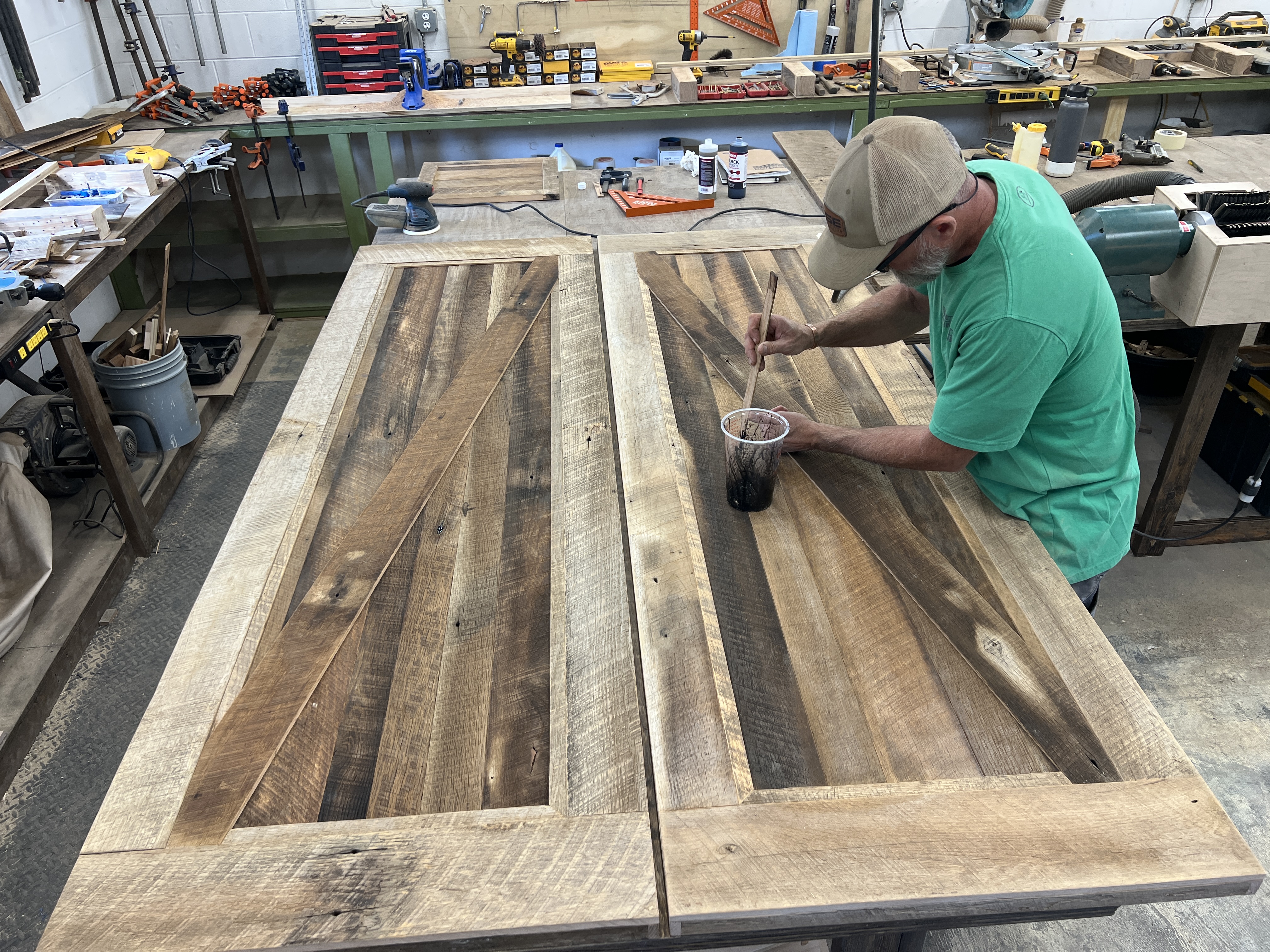
Raw reclaimed wood requires significant preparation before it can be used in a precision-built cabinet or furniture piece. Our process:
1. **Cleaning** — removing dirt, old paint, nails, and surface debris 2. **Kiln drying** — stabilizing moisture content and eliminating any pests or organisms 3. **Milling** — planing to consistent thickness while preserving natural face character 4. **Grading** — sorting by grain pattern, color, and character for visual consistency in a project
The result is wood that carries all the character and history of its age while meeting the dimensional and structural requirements of a precision-built piece.
What Reclaimed Wood Looks Like in a Modern Home
This is where we differ from most shops that work with reclaimed wood. We don't build rough, rustic barn-wood kitchens. We blend 100-year-old timber with clean modern design, precision joinery, and commercial-grade finishes.
The contrast between the age of the material and the precision of the design is what makes our reclaimed wood work distinctive. Old wood, modern lines. History and craft in the same piece.
Is Reclaimed Wood Right for Your Project?
Reclaimed wood is a good fit if:
- You want something genuinely one-of-a-kind — no two pieces of old-growth timber are alike
- You value the environmental story — old-growth wood has already done its carbon work; giving it a second life is the most sustainable choice you can make
- You want material that will only improve with age — reclaimed wood develops a patina over time that new wood cannot replicate
It may not be the right fit if you need exact color consistency across a large project, or if your timeline is very tight (sourcing and preparation add lead time).
Ready to Talk?
If you're considering a reclaimed wood project in Western North Carolina, East Tennessee, or Upstate South Carolina, we'd love to show you what's possible. We bring samples to every consultation and can walk you through specific wood species and finishes that would work for your space.
Call Jonathan at 828-550-4834 or use the contact form to start the conversation. The consultation is free.
Inspired? Let's Build Something Together.
Free consultation. Personal response from Jonathan or Jeff within 24 hours.
START YOUR PROJECT